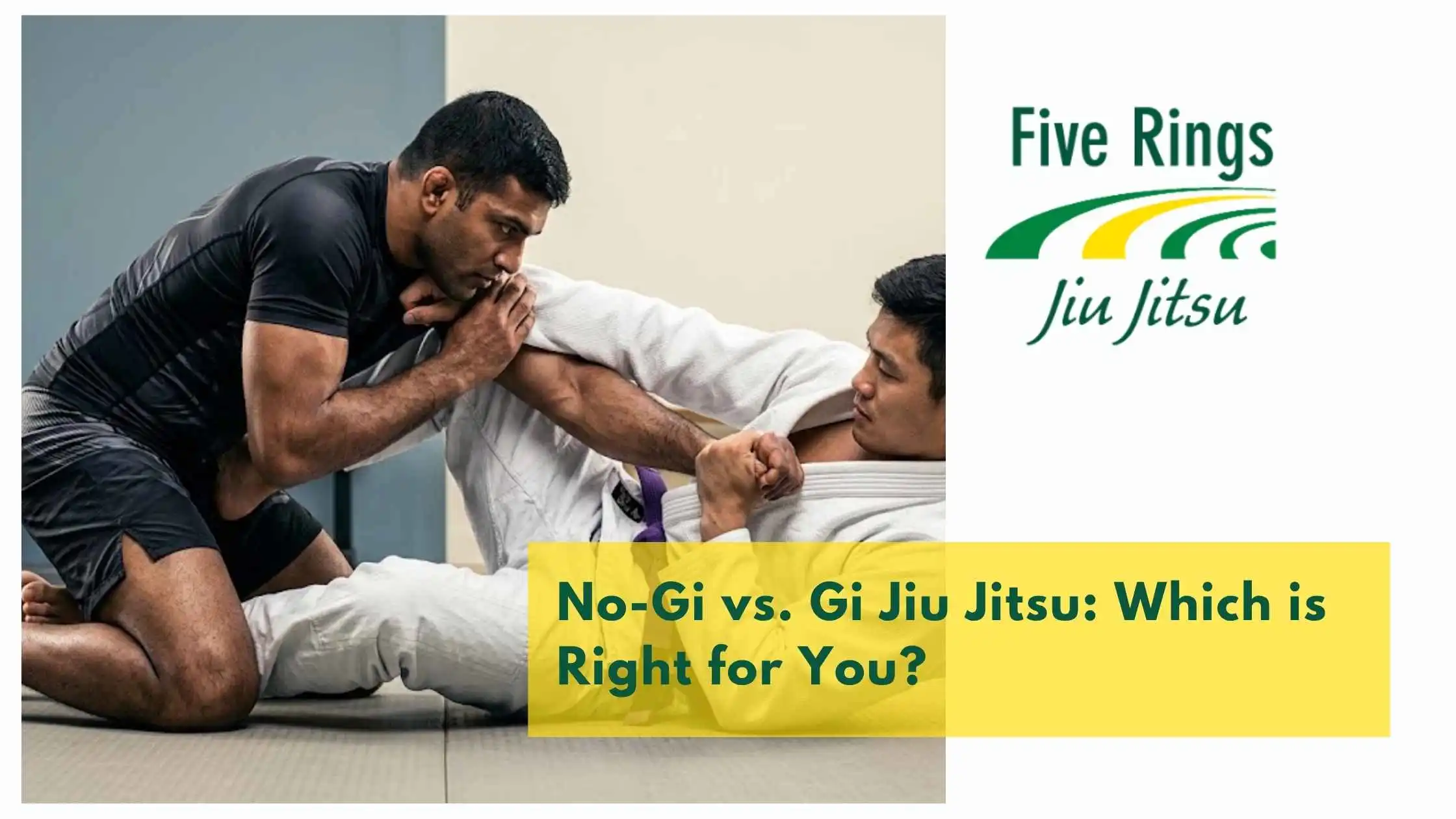
If you’re trying to choose between No-Gi and Gi Jiu Jitsu, the decision can feel confusing at first. Both styles are built around Brazilian Jiu Jitsu fundamentals such as takedowns, positional control, escapes, sweeps, and submissions, but they create very different training experiences. No-Gi removes the traditional uniform and relies heavily on body positioning, underhooks, overhooks, and controlling an opponent’s limbs and torso. Gi training introduces a jacket and pants that create additional gripping opportunities. At 5 Rings Jiu Jitsu, No-Gi grappling is approached as a practical and dynamic form of grappling that develops technique, movement, control, and submission skills.
What Is No-Gi Jiu Jitsu?
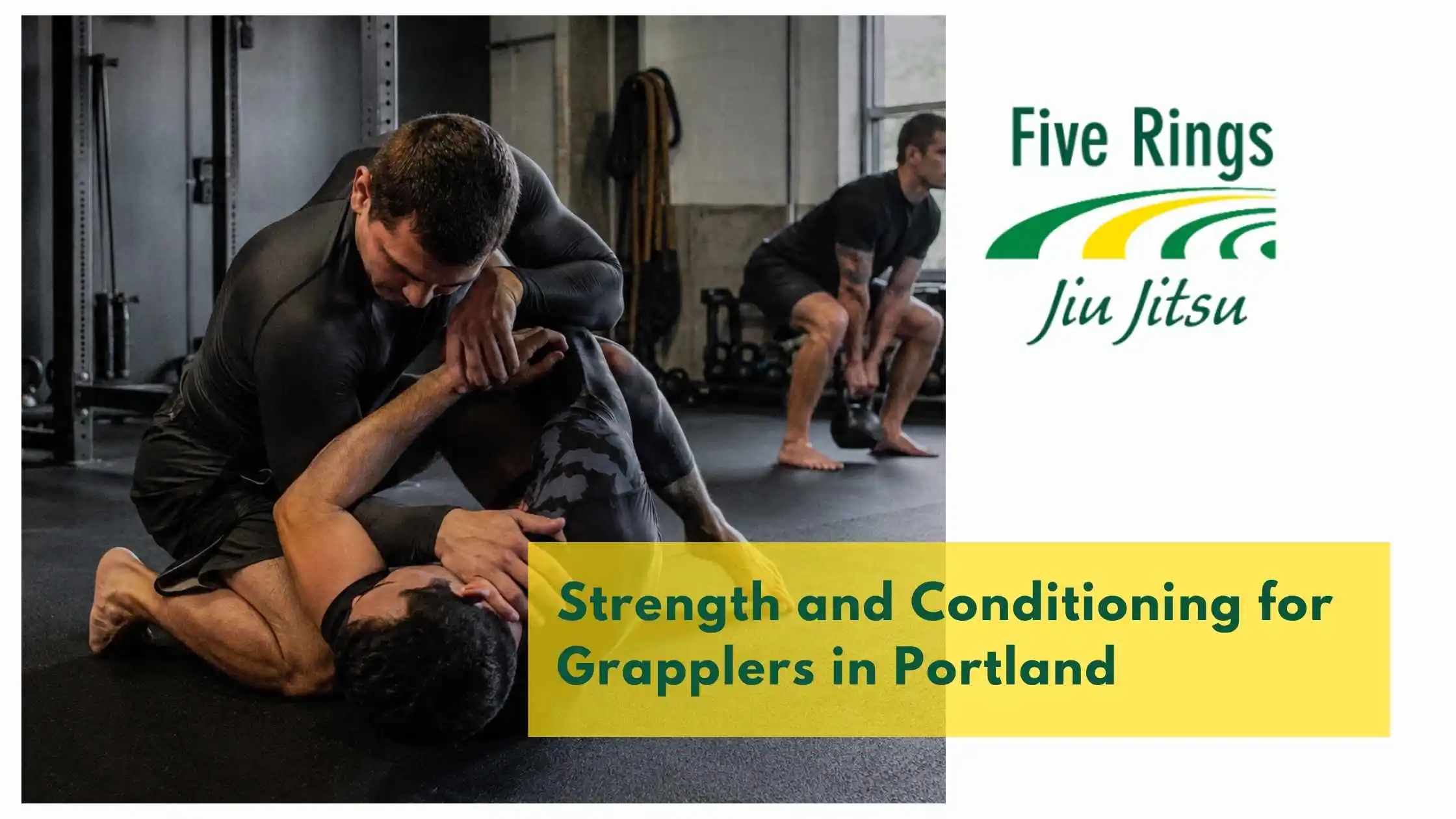
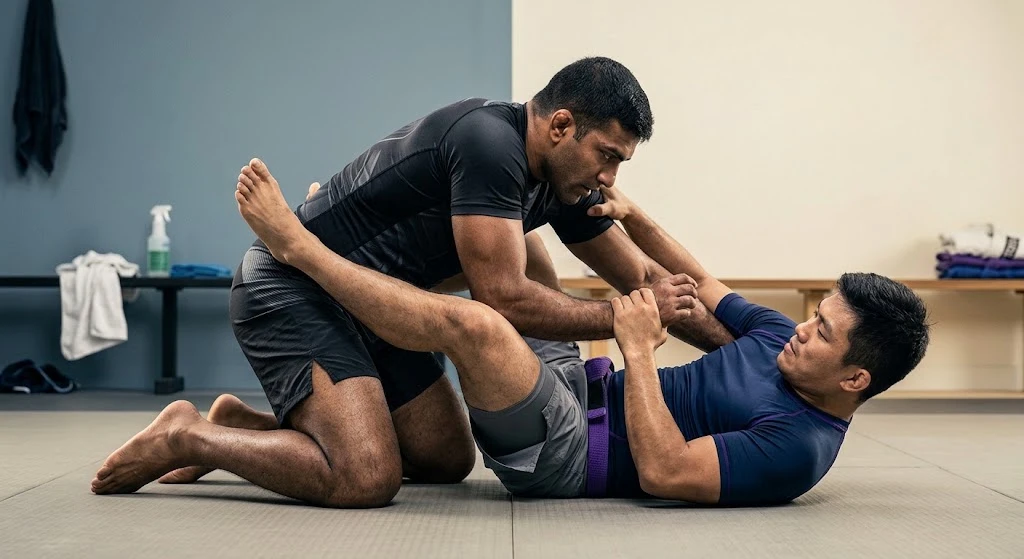
No-Gi is Brazilian Jiu Jitsu practiced without the traditional kimono, commonly called a Gi. Instead, students typically train in athletic clothing such as rash guards and grappling shorts.
Without thick fabric to grab, practitioners must rely more heavily on controlling the body itself. This changes how certain positions and techniques work.
How No-Gi Changes Your Training
In No-Gi, gripping opportunities are more limited. You cannot simply grab a sleeve, pant leg, collar, or lapel to control an opponent.
Instead, practitioners develop control through techniques such as:
- Underhooks
- Overhooks
- Wrist control
- Head control
- Body locks
- Leg control
- Positional pressure
- Movement and angles
This creates a fast-paced training environment where controlling an opponent’s movement becomes especially important.
According to 5 Rings Jiu Jitsu’s No-Gi grappling approach, training emphasizes grappling fundamentals while helping students develop practical control and submission skills without relying on clothing grips.
What Is Gi Jiu Jitsu?
Gi Jiu Jitsu uses the traditional Brazilian Jiu Jitsu uniform, which consists of a heavy jacket and pants. The fabric provides numerous gripping opportunities that aren’t available in No-Gi.
A practitioner can use the opponent’s collar, sleeves, pants, and other parts of the Gi to establish control and create leverage.
This adds another layer of technical complexity to training.
Why Gi Grips Matter
Gi grips can slow certain exchanges down and allow practitioners to maintain strong positional control. They can also create opportunities for techniques that depend specifically on gripping fabric.
For beginners, Gi training can be useful for learning the importance of posture, pressure, framing, grip fighting, and leverage.
At the same time, Gi Jiu Jitsu requires students to understand how their own clothing can be controlled by an opponent.
No-Gi vs. Gi: The Biggest Differences
The most obvious difference between No-Gi and Gi Jiu Jitsu is clothing, but the effects go much deeper.
Gripping
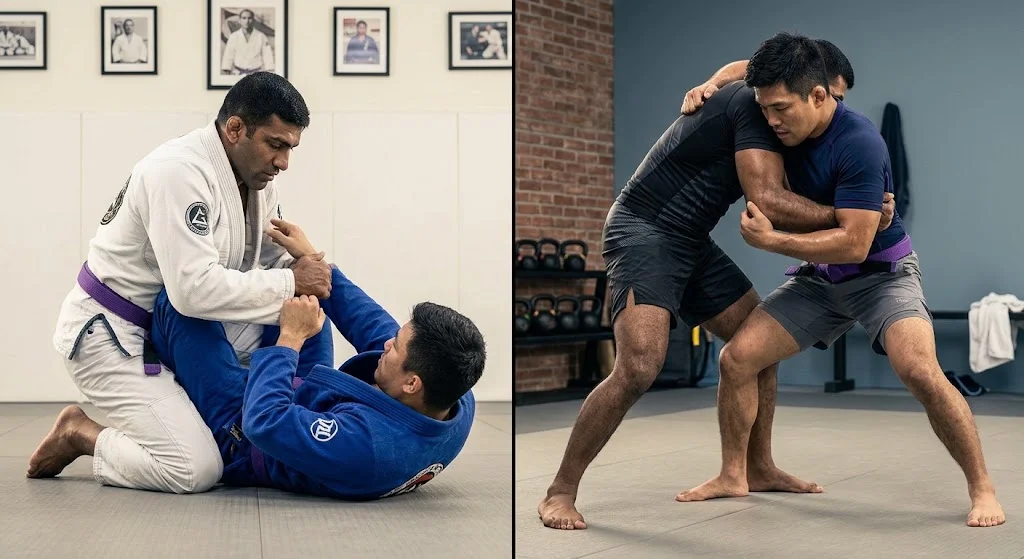
Gi Jiu Jitsu gives you access to collars, sleeves, pants, and lapels.
No-Gi eliminates those grips, requiring practitioners to control the opponent’s body directly.
Pace
No-Gi exchanges can feel faster because there is less friction and fewer clothing grips available to slow movement.
Gi Jiu Jitsu can involve more grip fighting and controlled positional exchanges.
However, neither style is automatically “better.” Training intensity and pace depend heavily on the instructor, training partners, and techniques being practiced.
Techniques
Many fundamental BJJ techniques work in both styles, including:
- Arm bars
- Rear naked chokes
- Guillotine chokes
- Triangle setups
- Sweeps
- Escapes
- Takedowns
- Positional transitions
The difference is often how practitioners establish the position and control needed to perform the technique.
Which Style Is Better for Beginners?
There is no universal answer.
A beginner should consider their goals, preferred training environment, and what type of grappling they find most enjoyable.
No-Gi can be appealing to people who prefer a more athletic, movement-focused training style. The lack of fabric grips encourages students to learn body control and positional movement from the beginning.
Gi Jiu Jitsu may appeal to people who enjoy the traditional Brazilian Jiu Jitsu format and the additional technical possibilities created by clothing grips.
The best choice is ultimately the style that motivates you to train consistently.
Why No-Gi Can Be a Great Choice
No-Gi training offers several benefits for people who want to develop their grappling skills.
Direct Body Control
Because clothing cannot be used for grips, practitioners learn to control the opponent through their body positioning and physical connections.
Dynamic Movement
No-Gi can encourage frequent transitions between positions. Students learn to move with their opponent instead of relying primarily on static grips.
Submission Grappling Skills
No-Gi is closely associated with modern submission grappling. Students can develop skills involving takedowns, positional control, escapes, transitions, and submissions.
Athletic Training
Rolling in No-Gi can provide a demanding physical workout. Training requires strength, mobility, coordination, balance, and cardiovascular conditioning.
However, good technique remains more important than simply trying to overpower a training partner.
Why Professional Coaching Matters
Jiu Jitsu is a technical sport. Trying to learn movements without proper instruction can lead to inefficient habits and unnecessary strain.
A qualified instructor can explain why a technique works rather than simply showing where to place your hands and feet.
For No-Gi specifically, coaching is valuable because students must learn how to establish control without relying on traditional clothing grips.
An instructor can help students understand concepts such as weight distribution, frames, underhooks, positional hierarchy, timing, and transitions.
At 5 Rings Jiu Jitsu, No-Gi grappling training provides a structured environment where students can develop these skills through instruction and live training.
No-Gi for People Interested in Modern Grappling
If your interest is primarily submission grappling, No-Gi may naturally fit your goals.
Without a Gi, training places greater emphasis on body-to-body control and techniques that translate across different grappling environments.
No-Gi also exposes students to a broad range of wrestling-influenced movements, positional transitions, and submission setups.
That does not mean Gi training lacks practical value. In fact, many experienced practitioners train both styles because each one develops different aspects of their overall Jiu Jitsu game.
Should You Train Both?
Absolutely.
You don’t necessarily have to choose one style permanently.
Training both Gi and No-Gi can make you a more adaptable grappler. Gi sessions can improve your grip fighting and understanding of leverage, while No-Gi can force you to develop stronger body control, movement, and positional awareness.
The skills often complement each other.
For example, someone accustomed to controlling an opponent’s sleeve in the Gi may need to develop stronger wrist and elbow control when switching to No-Gi. Likewise, someone who primarily trains No-Gi may discover new possibilities when learning how collars, sleeves, and lapels affect control.
How to Decide Between No-Gi and Gi
Consider these questions before choosing your primary training style:
What Do You Enjoy?
Enjoyment matters. If you look forward to No-Gi rounds more than Gi sessions, that’s a strong reason to focus on No-Gi.
What Are Your Goals?
If you are interested in submission grappling and fast-paced positional exchanges, No-Gi may be a natural fit.
If you want to explore traditional Brazilian Jiu Jitsu and clothing-based grips, Gi training may be more appealing.
What Classes Are Available?
The quality of instruction and training environment can matter more than the choice between Gi and No-Gi.
A supportive academy with knowledgeable coaches and safe training partners can help you progress regardless of the format.
Start Your No-Gi Journey
No-Gi and Gi Jiu Jitsu share the same foundation: learning how to control position, escape difficult situations, create opportunities, and apply effective techniques against resistance.
The difference is how those skills are developed.
No-Gi removes traditional clothing grips and puts greater emphasis on direct body control, movement, transitions, and submission grappling. Gi Jiu Jitsu adds an additional layer of gripping and technical possibilities.
If No-Gi sounds like the right fit for your goals, 5 Rings Jiu Jitsu can help you build your skills through structured No-Gi grappling training. Visit the No-Gi grappling program to learn more about training and take the next step toward becoming a more confident grappler.