For Portland parents looking for an activity that develops more than physical fitness, BJJ Classes can provide a unique combination of movement, coordination, strategy, and problem-solving. Brazilian Jiu Jitsu requires children to control their bodies, respond to changing positions, remember techniques, and figure out solutions when a particular movement does not work. At Five Rings Jiu Jitsu Portland, the children’s program is designed around age and developmental stage, helping young students learn appropriate skills while building confidence, discipline, focus, and character.
How BJJ Classes Build Coordination
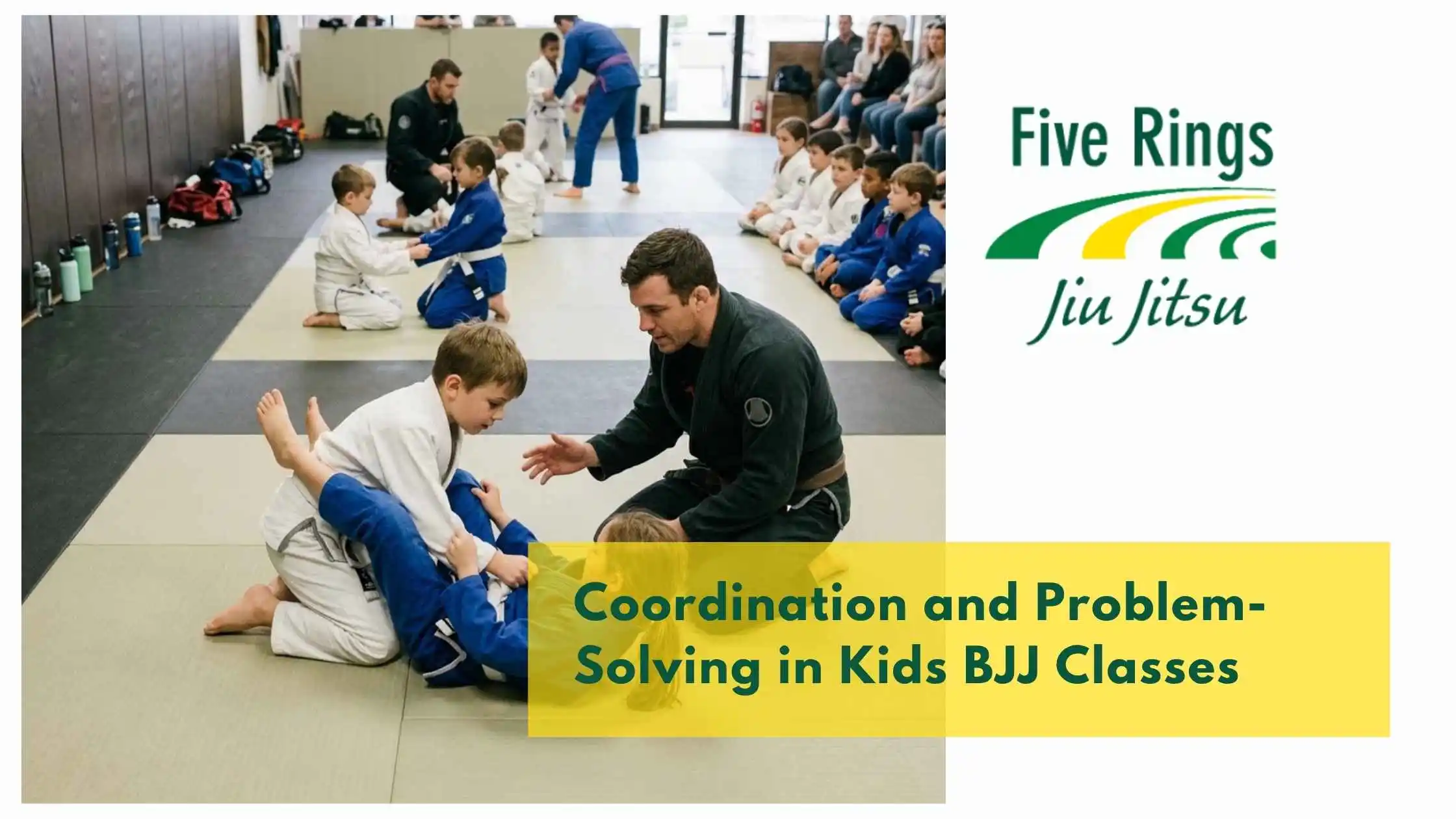
Coordination develops when children learn to make different parts of their bodies work together with purpose. Jiu Jitsu naturally creates opportunities for this because students constantly move, balance, grip, shift positions, and respond to a training partner.
During BJJ Classes, a child might need to coordinate their hands and feet while changing position or use their body positioning to maintain balance. These movements require concentration and repetition.
Over time, children become more comfortable controlling their movements instead of simply moving quickly. This can help them become more aware of where their bodies are in relation to other people and their surroundings.
Movement Through Play
Five Rings incorporates games and age-appropriate activities into its children’s program. This helps younger students stay engaged while developing physical and mental skills.
The academy’s program is based on the Skillz Martial Arts framework, which uses Brazilian Jiu Jitsu as a vehicle for children’s physical and character development. The curriculum is divided according to age and developmental stage rather than expecting every child to learn in exactly the same way.
Why Problem-Solving Is Part of BJJ Classes
Jiu Jitsu is often described as physical problem-solving because students constantly have to decide what to do next.
A technique may work in one situation but become ineffective when a training partner changes position. A child then has to recognize the change and find another option.
This creates a learning environment where children are encouraged to think instead of simply following instructions mechanically.
Learning Through Challenges in BJJ Classes
Suppose a child is practicing an escape and cannot complete the movement on the first attempt. The solution may require changing their position, adjusting their timing, or trying another technique.
With guidance from an instructor, the child learns that struggling with a technique is part of the learning process.
Five Rings specifically identifies problem-solving as one of the developmental benefits of its kids Jiu Jitsu program.
This experience can help children become more comfortable working through challenges instead of immediately giving up when something is difficult.
Age-Appropriate BJJ Classes in Portland
Children develop at different rates, so a five-year-old should not be expected to train exactly like a teenager.
Five Rings separates its kids program into age-based groups:
- Samurai: Ages 5–6
- Dragons: Ages 7–9
- Warriors: Ages 10–12
- Shinsengumi: Ages 13–16
This structure allows instruction to account for differences in physical development, attention, social skills, and learning ability.
Samurai: Building Early Foundations
The Samurai program is designed for younger children who are naturally curious and benefit from creativity and age-appropriate challenges.
At this stage, BJJ Classes can introduce foundational movements while giving children opportunities to explore coordination and simple problem-solving without expecting them to keep pace with older students.
Dragons: Developing Problem-Solving Skills
Children ages 7–9 are becoming more capable of understanding instructions and solving increasingly complex problems.
The Dragons curriculum builds on foundational Jiu Jitsu skills while encouraging curiosity and independent thinking.
Warriors and Shinsengumi in BJJ Classes
Older children and teenagers can handle increasingly advanced physical and technical challenges.
The Warriors program supports children ages 10–12, while the Shinsengumi program serves teens ages 13–16 and places additional emphasis on leadership, emotional intelligence, and social skills.
A Portland Child’s BJJ Learning Experience
Consider a Portland parent whose child has plenty of energy but struggles to stay focused when an activity becomes challenging.
The parent enrolls the child in a structured Jiu Jitsu program. At first, the child has difficulty remembering sequences and coordinating different movements. Some techniques require several attempts before they begin to make sense.
Instead of being expected to master everything immediately, the child receives instruction appropriate for their age and experience.
As classes continue, the child begins recognizing patterns. When a training partner changes position, the child starts thinking about what response might work. When a technique fails, they learn to make an adjustment instead of simply stopping.
The physical progress becomes noticeable, but so does the mental development.
The child becomes more comfortable listening to instructions, working through challenges, and trying again after mistakes.
That combination is one of the reasons parents may view BJJ Classes as more than an after-school physical activity.
How BJJ Classes Encourages Focus and Patience
Coordination and problem-solving are difficult without concentration.
Children need to listen to their instructors, remember movements, watch demonstrations, and pay attention to their training partners. They also need patience because technical skills are rarely mastered immediately.
Five Rings emphasizes focus, discipline, confidence, perseverance, and character development throughout its children’s curriculum.
The training environment gives children repeated opportunities to practice these qualities.
Mistakes Become Learning Opportunities
A child may perform a movement incorrectly several times before understanding what needs to change.
Instead of treating mistakes as failure, instructors can use them as opportunities for correction and learning.
This mindset can help children become more willing to attempt challenging tasks.
Why Professional Instruction Matters
Jiu Jitsu involves physical contact, so children’s training should take place in a structured and supervised environment.
Five Rings’ children’s program is led by experienced instructors. Head Coaches Tom Oberhue and Dan VanDetta have master’s degrees in education, more than 15 years of classroom experience, and 25 years of experience teaching children martial arts. The academy also states that instructors undergo extensive background checks.
This combination of teaching and martial arts experience is important because children’s classes require more than demonstrating techniques.
Instructors need to communicate at an age-appropriate level, maintain a safe environment, recognize differences between students, and keep children engaged while they learn.
Safety and Appropriate Pairing
Children can vary significantly in size, experience, confidence, and physical ability.
Five Rings emphasizes safety and uses structured age-based programs to help create an appropriate learning environment. Its program also focuses on learning and effort rather than simply winning.
That approach allows children to develop skills without turning every training session into a competition.
BJJ Classes Can Build Confidence
Confidence does not necessarily come from always succeeding.
For children, confidence can grow from discovering that they can struggle with something, practice it, and eventually improve.
A child who initially cannot perform a movement may eventually complete it independently. That small achievement can reinforce the idea that effort and persistence lead to progress.
Five Rings connects its kids program with confidence, self-esteem, goal-setting, leadership, respect, discipline, and perseverance.
These lessons can extend beyond the Jiu Jitsu academy.
Leadership and Teamwork on the Mat
Problem-solving in Jiu Jitsu is not always an individual activity.
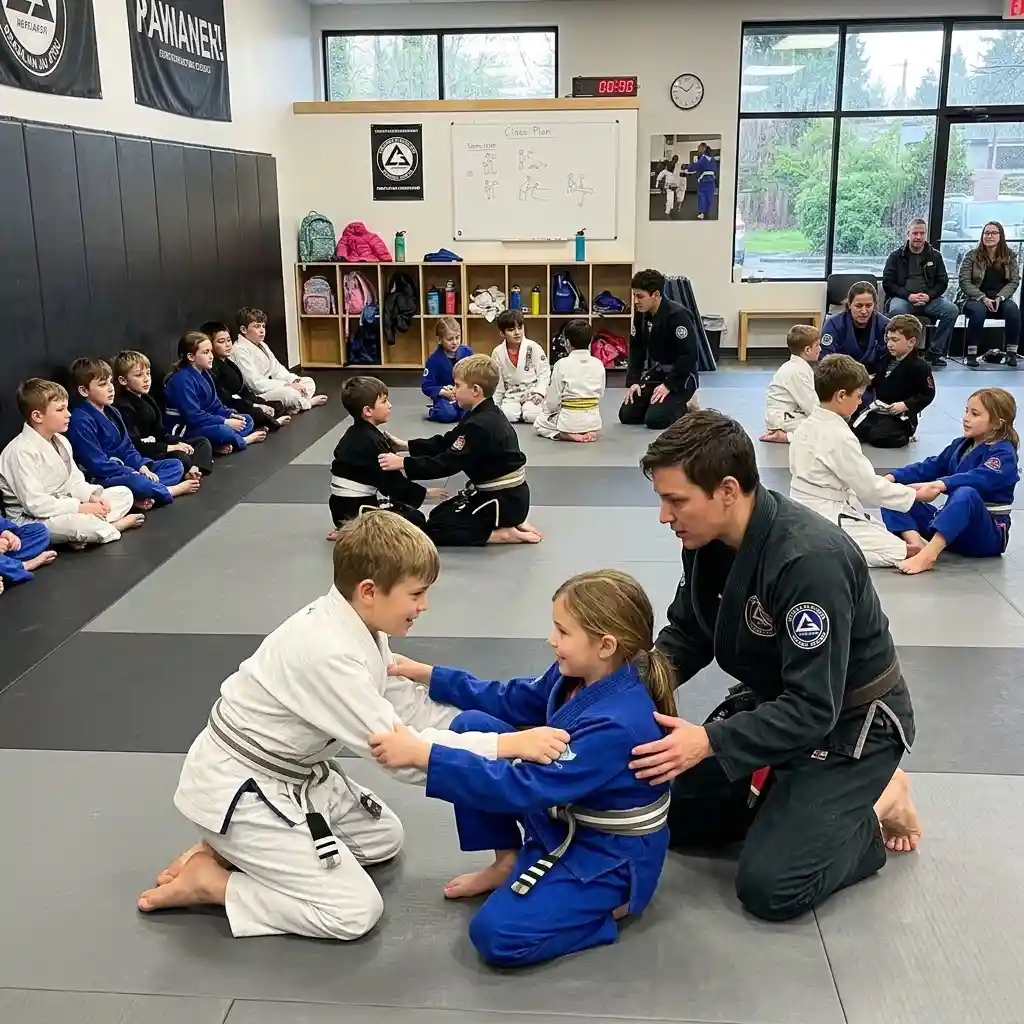
Children train with partners and learn how to communicate, cooperate, and respect one another. More experienced students can also have opportunities to help newer classmates.
Five Rings’ children’s program includes leadership opportunities through its Leaders in Training program, where experienced students can assist younger classes.
This gives older students an opportunity to practice responsibility while younger students receive support from peers.
Why Portland Parents Choose Five Rings
Five Rings Jiu Jitsu Portland offers a family-friendly environment where children can learn Brazilian Jiu Jitsu while developing physical and life skills.
The academy’s kids program combines age-appropriate Jiu Jitsu instruction with lessons in confidence, discipline, respect, coordination, problem-solving, leadership, and practical self-defense.
The structured youth schedule includes separate classes for different age groups, helping children train with peers at similar developmental stages.
For parents looking for an activity that challenges both the body and mind, this approach can offer more than a traditional fitness class.
Help Your Child Build Skills That Last
BJJ Classes can give Portland children a structured way to develop coordination, focus, confidence, and problem-solving skills while learning Brazilian Jiu Jitsu.
At Five Rings Jiu Jitsu Portland, the children’s program is built around developmental stages so students can receive age-appropriate instruction in a safe and supportive environment. Experienced coaches help children learn technique while encouraging discipline, perseverance, respect, and personal growth.
Contact Five Rings Jiu Jitsu Portland at (503) 327-8265 or visit the academy at 8775 SW Canyon Ln, Portland, OR 97225, to learn more and get your child started.
FAQs About Kids BJJ Classes
What do kids learn in BJJ Classes?
Children learn Brazilian Jiu Jitsu fundamentals while developing coordination, confidence, discipline, problem-solving skills, respect, and practical self-defense awareness.
What age can children start BJJ Classes at Five Rings?
Five Rings offers age-based programs beginning with the Samurai group for children ages 5–6, followed by Dragons, Warriors, and Shinsengumi programs for older children and teens.
Can BJJ help with problem-solving?
Yes. Jiu Jitsu requires students to respond to changing positions and determine how to overcome different challenges. Five Rings specifically includes problem-solving among the benefits of its kids program.
Are kids BJJ Classes safe for beginners?
Five Rings provides structured, age-appropriate instruction and emphasizes safety and supervision. Its instructors have extensive experience teaching children.